Tuesday, June 20, 2006

Make-Ahead Decadent Chocolate Mousse .... just for lovers and friends

1 bar (400 g) Milk Chocolate with Honey Almond Nougat (I use Pres. Choice
1 can (425 g) Pres. Choice Devon Custard (yummy with all desserts)
1 cup (250 mL) 35% whipping cream

Instructions
Break chocolate into pieces, setting aside two triangle segments. Place in microwave-safe bowl and microwave on MEDIUM-HIGH for 2 to 4 minutes, stirring occasionally, or until chocolate is melted. Stir in custard.
In another bowl, whip cream until stiff peaks form. Fold into custard mixture. Divide among 8 glasses. Cover with plastic wrap. Chill for 2 to 3 hours.
Coarsely chop reserved chocolate triangles. Sprinkle over mousse just before serving.
* Chill for 3 hrs
Recipe Tips
To melt chocolate on stove top, place in bowl set over (not in) saucepan of simmering water for 4 to 6 minutes, stirring occasionally, or until melted. Remove bowl from saucepan before stirring in custard.
Nutritional Information
Calories 442 Cal; Fat 29 g; Sodium 62 mg; Carbohydrate 40 g; Protein 5.2 g

Easy, Cool Summer Salad


1 English cucumber, peeled and cut in bite-sized pieces
4 vine-ripened tomatoes, cut in bite-sized pieces
1/2 medium red onion, thinly sliced
1 tub (175 g) Goats Milk Feta Cheese in brine, drained and crumbled
1 cup (250 mL) drained pitted black olives
1/2 cup (125 mL) Vinaigrette (I use Pres. Choice Mediterranean)

Instructions
In large bowl, gently toss together cucumber, tomatoes, onions, feta, olives and vinaigrette

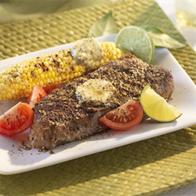
Grilled Montreal Steak and Corn


This classic dish of corn on the cob and a great steak has summer written all over it!
Prep time: 10 minutes. Cook time: 20 minutes Makes 4 servings
1/2 cup salted butter, softened 1 tbsp Montreal Steak Spice , 4 ears corn, 2 tsp New! Montreal Steak Spice, 4 boneless striploin steaks, 8 oz. 1 lime, cut in four wedges
1. In small bowl and using wooden spoon, beat butter until smooth. Beat in 1 tbsp steak spice. Spoon onto piece of plastic wrap. Roll into a log. Chill until firm.
2. Preheat barbecue to medium heat.
3. Discard corn husks. Rinse corn under cold running water. Shake off excess water. Wrap each ear separately in foil. Place on grill. Cook with lid up for 15 to 20 minutes, turning occasionally. Meanwhile, rub 2 tsp steak spice over both sides of steaks. Place steaks on greased grill; cook uncovered for 4 to 5 minutes per side for medium, or to desired doneness.
4. Place a steak on each of four dinner plates. Cut log of butter in half. Re-wrap half to use another day; cut remainder crosswise into eight medallions. Carefully unwrap corn; place one ear of corn on each plate. Top corn and steak each with a compound butter medallion. Serve wedge of lime with corn.

To Start ..... just a few munchies and drinkie poohs


Curry Dip
Serves: 8
Nonfat yogurt and low-fat mayonnaise make this creamy dip a good addition to any veggie plate. INGREDIENTS 1/4 cup low-fat mayonnaise, 3/4 cup plain nonfat yogurt, 2 teaspoons tarragon vinegar, 1/8 teaspoon thyme, 1/2 teaspoon curry powder, 2 teaspoons chili sauce
DIRECTIONS1. Combine all ingredients and chill in refrigerator for at least 3 hours. 2. Serve with crisp raw vegetables. NUTRITION INFO (per 2-tbsp serving)
Calories: 19.4 .... so NON-fattening!!! Fat: 1.2 g Carbohydrates: 1.4 g Protein: 0.7 g

SUMMER TIME .... time for fun, family and friends ...have a great time!!


Hope you all have a wonderful, fun-filled summer with all those you love around you. Splash a lot, soak each other and when the fun is done, hope you have some great meals on the barbie with all your friends and family.

Wednesday, May 31, 2006

There's More to Tomatoes than in the Eating

  • The tomato is ready to plant out once the first flower-bearing truss has formed.
  • Watering the plants regularly will help to prevent the fruits' skin from splitting.
  • When four trusses have set fruit, remove the growing tip to hasten ripening.
  • Remove sideshoots: Using your thumb and finger, nip out any sideshoots that develop between the leaf and the stem to help channel the plant's energy into its fruits. Watering and regular feeding with a high-potash fertiliser will ensure a plentiful, healthy crop.
  • Remove weed competition from around the tomato plants during the summer.
    Pick the fruits when they are fully ripe, to capture all the flavour.

Can Tomatoes Help Prevent Cancer?


Putting the romance of the western world's fourth most popular fruit (after bananas, apples and oranges) to one side, there's a lot more to tomatoes than just good looks and a great taste. Tomatoes contain virtually no fat and no cholesterol. They are very low in calories, typically only 10-15 kcals for a medium sized fruit, and are packed full of Vitamins A, C and E.
But it's the tomato's natural red pigment, lycopene, that has had the medical profession mooting its role as a "miracle fruit" most recently. The Cancer Research Campaign has recommened people increase the amount of fresh, ripe tomatoes they eat. Evidence suggests that a high intake of lycopene (an effective antioxidant ) can reduce the risk of cancer and other serious diseases.
Scientists have developed a genetically modified tomato which could be used to keep people healthy. They believe the fruit could even help to ward off heart disease and cancer.
Using gene technology they were able to increase levels of beneficial chemicals called falvonols in tomato peel.
Flavonols are powerful antioxidants, chemicals which fight disease by neutralising harmful oxygen molecules that circulate in the body, damaging tissues and accelerating the ageing process.
Some foods, such as onions and tea, are rich in these substances.
They are found naturally in tomato skin, but at much lower levels.
The British and Dutch scientists found that flavonol synthesis in the tomato is governed by an enzyme called chalcone isomerase.

An Irresistible Summer Tomato Tart - easier than all the wording it takes to tell you about it!!


Preparation time 30 mins
Cooking time 30 mins
Healthy and Gluton Free tart which would go well with a salad of rocket leaves or a good green salad. You might like to substitute goat's cheese or buffalo mozzarella for feta occasionally.
Ingredients: 2 red peppers, 1 tbsp extra virgin olive oil, 1/2 quantity of pastry or 9 inch bought pastry shell, rice flour, for dusting, egg wash, 175g/6oz feta cheese, 10 or more basil leaves, salt and freshly ground pepper, sugar (or balsamic vinegar) 8 tbsp tomato fondue (see below) 2-3 tbsp gluten-free pesto For the tomato fondue: 2 tbsp extra virgin olive oil, 110g/4oz onions, sliced1 garlic clove, crushed, 900g/2lb very ripe tomatoes, peeled, in summer, or 2½ x 400g/14oz cans tomatoes in wintersalt, freshly ground black pepper and sugar, to taste, 1 tbsp any of the following:freshly chopped mint or torn basil or a mixture of thyme, parsley, lemon balm and marjorama few drops of balsamic vinegar NB: This makes more than the required amount of tomato fondue. However, the remainder can be used as a sauce for pasta, a filling for omelettes, a topping for pizza or a base for bean stews.
Method1. For the tomato fondue, heat the oil in a heavy-based cast-iron or stainless-steel saucepan. Add the onions and garlic, toss until coated, cover and sweat on a gentle heat until soft but not coloured. It is vital for the success of this dish that the onions are completely soft before the tomatoes are added. Slice the peeled fresh or canned tomatoes and add with all the juice to the onions.2. Season with salt, freshly ground black pepper and sugar (canned tomatoes need lots of sugar because of their high acidity). Add the herbs. Cook, covered, for 10 minutes. Remove the lid and continue to cook for about 10 minutes more, or until the tomato softens. Cook fresh tomatoes for a shorter time to preserve the lively fresh flavour. 3. Add a few drops of balsamic vinegar at the end of cooking to greatly enhance the flavour.4. For the tart, preheat the oven to 250C/475F/Gas 9.5. First roast the red peppers. Place them on a baking tray and rub the surface with a little olive oil. Bake in the oven for 20-30 minutes, until they are soft and the skin blisters. Put them in a bowl and cover with cling film. Leave until cool enough to handle. Peel the peppers and remove the stalk and seeds but don't wash away the sweet juices. Cut into strips. 6. Reduce the oven temperature to 180C/350F/Gas 4.7. Make the savoury pastry following the recipe. Roll out the pastry on a very lightly rice-floured board. Line the tin with the pastry to a thickness of about 3mm/1/8in. Line to the top with parchment paper and fill with baking beans. Chill the pastry for a further 15-20 minutes and then bake the tart base blind for 15 minutes or until pale golden. 8. Remove the beans and paper, brush the tart shells with a little beaten egg and return to the oven for a further two minutes. This seals the pastry and helps to avoid a soggy bottom!9. Crumble the feta cheese using the tips of your fingers and spread half the cheese over the base of the pastry. Arrange a layer of roasted red pepper strips and basil leaves on top. Season with a little salt and freshly ground black pepper and a sprinkle of sugar or balsamic vinegar (take care when seasoning as feta is quite salty). Cover with eight tablespoons of tomato fondue and spread the remaining feta cheese over. 10. Return the tart to the oven for 10-15 minutes until it is hot and bubbly. Drizzle the tart generously with pesto and serve immediately. It is much more than yummy!!!

and yet ..... more tomatoes ... this one is easy peasy!!


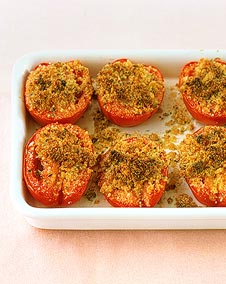
Baked Tomatoes

Serves 4; Prep time: 10 minutes; Total time: 30 minutes
4 tomatoes, halved
1/4 cup finely grated Parmesan cheese
2 tablespoons plain breadcrumbs
1/2 teaspoon mixed dried herbs (thyme, marjoram, oregano, and basil)
1 tablespoon olive oil
1/4 teaspoon salt
1/8 teaspoon pepper

1. Preheat oven to 425°. Halve 4 tomatoes lengthwise; slice off a sliver from the skin side so that the halves lie flat in a baking dish.
2. In a small bowl, toss together 1/4 cup finely grated Parmesan cheese, 2 tablespoons plain breadcrumbs, 1/2 teaspoon mixed dried herbs (thyme, marjoram, oregano, and basil), 1 tablespoon olive oil, 1/4 teaspoon salt, and 1/8 teaspoon pepper. Mound mixture on top of each tomato half.
3. Bake until tomatoes are soft and topping is crisp and browned, about 20 minutes.
Per serving: 72 calories; 4.7 grams fat; 2.3 grams protein; 5.9 grams carbohydrates per serving

Thursday, May 18, 2006

The Firmament


That Nature hung in Heav'n, and filled their lamps
With everlasting oil, to give due light To the misled and lonely traveller. Milton

The most beautiful thing we can experience is the mysterious. It is the source of all true art and all science. He to whom this emotion is a stranger,who can no longer pause to wonder and stand rapt in awe, is as good as dead:His eyes are closed.
Albert Einstein

The word firmamentum means in classical Latin a strengthening or support. The firmament was the eighth sphere carrying the fixed stars, which surrounded the seven spheres of the planets in the geocentric model.

Gaak --- Artifical Intelligence


In June 2002, a robot called Gaak gave an alarming demonstration of its independence. It made a dash for freedom from an exhibit at the Magna science centre in Rotherham. Gaak crept along a barrier until it found a gap and squeezed through. Having left the building, it reached Magna’s exit by the M1 motorway before it was rumbled.

Just Love


No Lies .... just love
so when your new eyes meet mine, they won't see no lies .... just love, just love.
Bright Eyes

Sunday, May 14, 2006

Happy Mother's Day and Thanks to Mitochondrial DNA

"Where do we come from?" This has been one of the fundamental questions asked by humans for thousands of years.


Physical anthropologists have been providing an answer for over a hundred years by studying morphological characteristics, such as skull shape, of the fossilised remains of our human and proto-human ancestors. For the last 15 years or so, molecular anthropologists have been comparing the DNA of living humans of diverse origins to build evolutionary trees. Mutations occur in our DNA at a regular rate and will often be passed along to our children. It is these differences (polymorphisms) that, on a genotypic level, make us all unique and analysis of these differences will show how closely we are related. However, different approaches used by molecular and physical anthropologists have led to opposing views on how modern humans evolved from our archaic ancestors. Mitochondrial DNA is present inside the nucleus of every cell of our body but it is the DNA of the cell's mitochondria that has been most commonly used to construct evolutionary trees.
Mitochondria have their own genome of about 16,500 bp that exists outside of the cell nucleus. Each contains 13 protein coding genes, 22 tRNAs and 2 rRNAs. They are present in large numbers in each cell, so fewer samples are required.
They have a higher rate of substitution (mutations where one nucleotide is replaced with another) than nuclear DNA making it easier to resolve differences between closely related individuals.
They are inherited only from the mother, which allows tracing of a direct genetic line.
They don't recombine. The process of recombination in nuclear DNA (except the Y chromosome) mixes sections of DNA from the mother and the father creating a garbled genetic history.
Happy Mother's Day and if you are saying it with flowers remember to thank your mothers for their Mitochondrial DNA and your genetic lineage.

Saturday, April 22, 2006

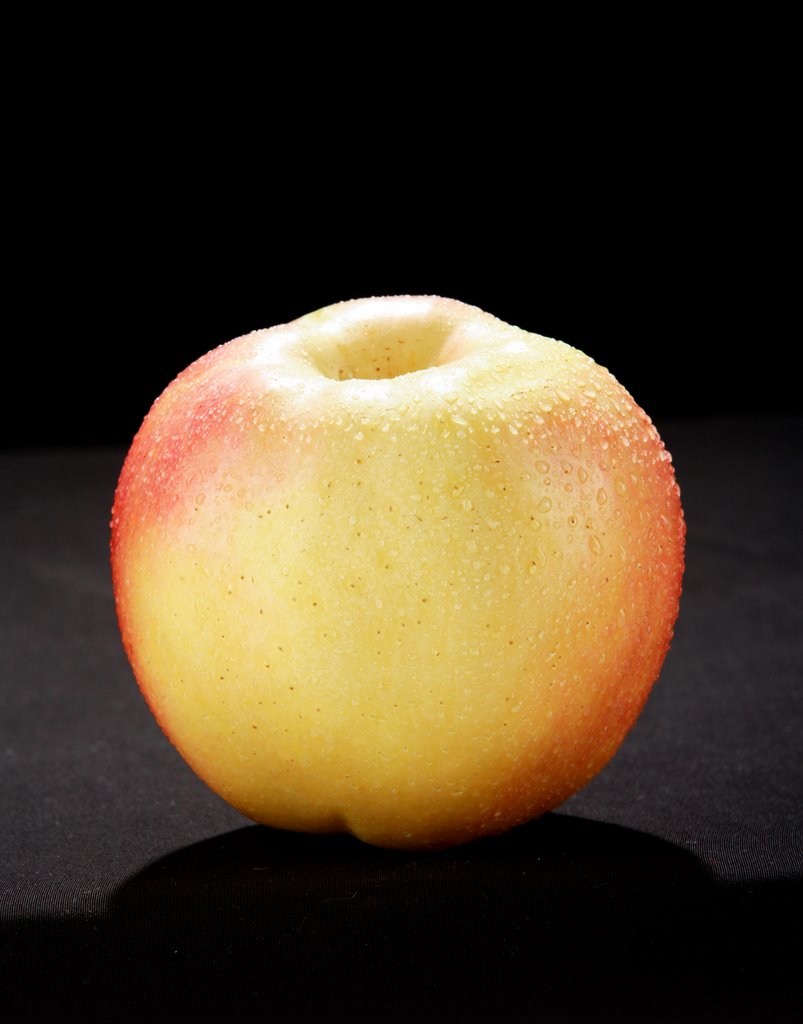
Just as your Mother told you : an apple a day keeps the doctor away


EAT WELL and stay healthy. An apple a day could inhibit the growth of human cancer cells by about 50%. The active ingredients are most likely the phenolic and flavonoid compounds in the apple.

So always remember to listen to your Mum xxxxx

String Theory, Parallel Universes and other things I don't understand

The idea of travelling forward into the future or back into the past has always fascinated science fiction writers. The 'grandfather paradox' is the argument many people use to suggest that time travel is impossible. What if you went back in time and prevented your grandfather from meeting your grandmother so that your mother was never born? Then you would never have been born... and so on.
Until very recently such arguments led most scientists to believe that time travel could never exist outside science fiction. But amazingly, some interpretations of the weirdness of the quantum world now suggest that time travel is possible - at least in theory.
Gravity and black holes : Einstein's theory of relativity brought space and time together in a single, four-dimensional arrangement that he called spacetime. We know that we can travel forwards, backwards and sideways in space, so why not forwards and backwards in time?
Four dimensions are difficult to imagine, so physicists usually suggest you think of spacetime as a rubber sheet stretched out flat. If there are no large masses around, the sheet stays flat, and so any object placed on it will move around in straight lines. But a large mass, such as the sun, makes a dip in the sheet because it actually warps spacetime. Now any other object with smaller mass, like our Earth, moving about in spacetime rolls into the dip as it comes past the Sun. It appears 'attracted' to the large mass. This effect of warping spacetime is what gives rise to gravity.
The Universe is full of heavy objects exerting gravitational effects and the net result is that spacetime is not flat at all but curved. Everything, including light, has to follow curved paths in spacetime. We know Einstein was right about this because astronomers can sometimes see distant stars that ought to be masked by nearer objects such as the sun. Instead of travelling in straight lines and hence being blocked, the light from the stars bends round the obstruction.
When a star reaches the end of its life, it may collapse inwards under the influence of its own gravity to such an extent that all its matter becomes concentrated into an extremely dense object a fraction of its original size. This is a black hole. Black holes have such a huge gravitational pull that nothing can escape from them, not even light. We cannot see them but we have good evidence that they exist. We can see stars behaving in ways which suggest that they are being pulled about by a nearby invisible object with enormous mass.
What does a black hole do to spacetime? Relativity predicts that at the centre of a black hole is an infinitely dense point, called a singularity, within which all the normal laws of physics no longer apply. Time, space, matter and energy no longer have any well-defined meaning. Einstein's equations show that such a singularity doesn't just make a dip in the imaginary rubber sheet of spacetime, it makes a tunnel that goes right through and momentarily opens out on the other side.
Einstein's theory of relativity only deals with the physics of what happens on big scales. It cannot deal with what happens at the centre of a black hole, or what happened during the moment of the Big Bang at the birth of the Universe when spacetime itself was infinitesimally small. That takes us back into the world of quantum physics.
If you could look at spacetime with a magnifying glass so powerful that it reached down to the quantum scale, you would not see the smooth, continuous sheet of Einstein's spacetime. Just as a foam rubber ball looks smooth from a distance but rough and ragged close up. In this picture of spacetime it is quite likely that tiny holes could open up, entrances to little tunnels between now and other times, or between here and other universes. Another option for future time travellers would be somehow to harness these tiny wormholes and expand them.
Many worlds, many futures?To return to the question that has puzzled thinkers since Newton's day, is the future preordained? Or are there an infinite number of futures? One way of looking at the quantum world suggests that not only are there an infinite number of futures, but they are realised in an infinite number of universes.
But the idea of parallel universes provides a possible resolution to the 'grandfather paradox' that might otherwise cause problems for time travellers. If we travel back in time and change history, we launch ourselves into a new future in a parallel universe - but we have no effect on the present one from which we started out.
Scientists of the future may well pursue a new form of futuristic technology based on quantum effects. Such applications could include quantum teleportation, by which a quantum particle can be teleported from one point in space to another; and quantum computation, where calculations can be carried out which would take many years on a conventional computer. (Copyright BBC science programs) Fascinating stuff, don't ya think? 11th dimension, time travel, parallel universes, not just science fiction but science theory (or are they one and the same?). In two weeks, look for great news on Mitochondrial DNA in time for Mother's Day!!

Monday, April 10, 2006

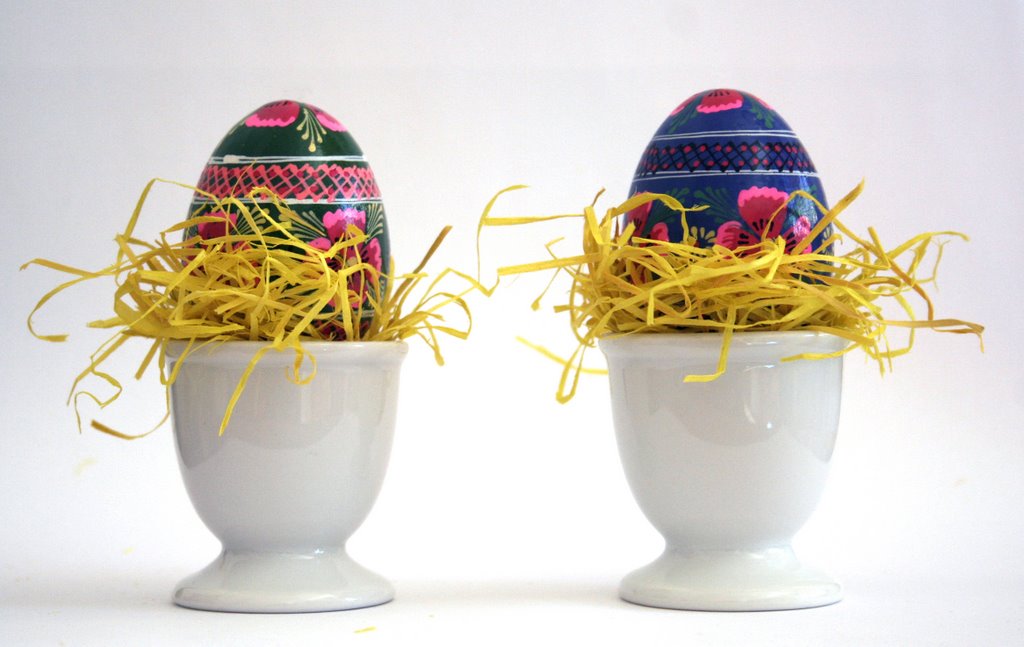
A Joyous Easter : a Christian Celebration and a Pagan Rite of Spring


It is believed that the name Easter is derived from the Scandinavian word "Ostra" and the Teutonic word "Ostern" or "Eastre." They are the goddesses who signify fertility and Spring.

The egg is a symbol of Easter because it is associated with fertility and new life. Eggs have been associated with Easter for centuries.
The world's largest Easter egg is located in Vegreville, Alberta. The Vegreville Pysanka ("Easter Egg" in Ukrainian) stands 31 feet high and weighs 5,000 pounds.
The Cadbury Creme Egg made its debut in 1971.
The most valuable Easter eggs are Fabergé eggs, created for the Russian royal family. They are enameled and jewelled.
The Easter Bunny tradition dates back to pre-Christian times when the hare and the rabbit were the most fertile animals known. They were chosen as a symbol of new life during spring.
The first edible bunnies were made in Germany during the early 1800s.
In Australia, the rabbit is a pest and does much damage to the environment. Instead, many Australian's have claimed the bilby, a native rodent, as their Easter symbol.
The Easter Lily is the symbol of resurrection and the purity of Christ. Why not decorate your home with flowers this Easter

May it not be that, just as we have to have faith in Him, God has to have faith in us and, considering the history of the human race so far, may it not be that "faith" is even more difficult for Him than it is for us?
(W.H. (Wystan Hugh) Auden (1907-1973), Anglo-American poet. "God," A Certain World (1970).)

Saturday, April 08, 2006

On Palm Sunday ... a Chocolate Cake to make for Easter!!


When friends care ...... they share .... so for Easter ....my very favourite chocolate cake recipe. Yes, it is from scratch but not any more difficult once you have all ingredients together .... and the taste is to die for!! Thought I would post now so that you can get all ingredients ready to make for next Sunday. Enjoy!! Happy Easter.


Fay's Chocolate Cake:

Ingredients: 1/2 cup unstalted butter at room temperature, 1 1/2 cups granulated sugar, 1/2 cup brown sugar, 2 eggs, 2 tsp vanilla extract, 1/2 cup water, 4 oz unsweetened chocolate, chopped, 2 tsp espresso powder (or strong espresso made in 1/4 cup of the water above - this is what I do as I can't find espresso powder), 1 3/4 cups pastry flour, 1/4 cup cocoa powder, 1 tsp baking soda, 1/4 tsp salt, 1 cup sour cream. Method: Preheat oven to 350 def. F. butter and flour two 9-inch cake pans. Cream butter and sugar together until fluffy. Beat in eggs and vanilla. In a small pan, stir water, chocolate and espresso powder over low heat until melted. Allow to cool slightly before beating into butter mixture. Sift together flour, cocoa powder, baking soda, and salt and stir into batter alternatively with sour cream. Divide evenly between the 2 pans and bake for 25-35 mins. or until a tester inserted in the centre comes out clean. Allow to cool 15 mins and then turn cakes out onto a plate to cool completely. Frosting: 2 cups unsalted butter at room temperature, 12oz bittersweet or semisweet chocolate, chopped, melted and cooled to room temperature,2 tsp vanila extract, 1/4 tsp salt, 2 1/2 cups icing sugar, sifted. Beat butter on high speed, scraping sides frequently, until light and fluffy. Add melted chocolate and mix. Add vanilla, salt and icing sugar and beat until smooth Assemble:Top one layer with icing and spread. Place second layer on top, ice sides and top. Chill cake to set .... but it is best stored and room temperature.

Thursday, April 06, 2006

35M dollars US for a Turner actioned today at Christies.... this is my masterpiece

I think you will all agree that my study in light and colour provides all that Turner had to offer and more. My painting is called "Rouge on Red" : A RETROSPECTIVE OF CITY LIFE ENCOMPASSING THE DURABILITY OF THE HUMAN SPIRIT. I welcome any bidders .... $20 is the bid for the Weekend-to-end Breast Cancer. Please make your bid in the comments. Love and bizous .... Emma xxxx

Saturday, April 01, 2006

Emma's Biscotti


This cranberry and pistachio biscotti recipe is easy ..... will keep ages and ages in an airtight tin and great dunked in a Starbucks espresso (sorry Tim H!!). Also packed with anti-oxidants (cranberries y'know!):
1/2 cup dried cranberries
1/2 cup boiling water
3 cups all-purpose flour, plus more for dusting
2 teaspoons baking powder
1/4 teaspoon salt
4 tablespoons unsalted butter, room temperature
1 cup sugar, plus more for sprinkling
3 large eggs, plus 1 large egg, lightly beaten, 2 teaspoons pure vanilla extract 1/2 cup unsalted pistachios, coarsely chopped (2 1/2 ounces)
1. Preheat oven to 375°. Line a large baking sheet with parchment paper; set aside. Place cranberries in a small bowl; add boiling water. Let stand until plump, about 15 minutes. Drain, and set aside. Sift together flour, baking powder, and salt into a medium bowl; set aside.
2. In the bowl of an electric mixer fitted with the paddle attachment, beat butter and sugar on medium speed until light and fluffy, about 2 minutes. Add 3 eggs, one at a time, beating to incorporate after each addition and scraping down sides of bowl as needed. Beat in vanilla. Add flour mixture, and mix on low speed until combined. Mix in cranberries and pistachios.
3. Turn out dough onto a lightly floured surface; divide in half. Shape each piece into a 16-by-2-inch log, and transfer to prepared baking sheet, about 3 inches apart. With the palm of your hand, flatten logs slightly. Brush beaten egg over surface of the dough logs, and sprinkle generously with sugar.
4. Bake, rotating sheet halfway through, until logs are slightly firm to touch, about 25 minutes. Transfer logs on parchment paper to a wire rack to cool slightly, about 20 minutes. Reduce oven temperature to 300°.
5. Place logs on a cutting board. Using a serrated knife, cut logs crosswise on the diagonal into 1/2-inch-thick slices. Place a wire rack on a large rimmed baking sheet. Arrange slices, cut side down, on rack. Bake until firm to touch, about 30 minutes. Remove pan from oven; let biscotti cool completely on rack. Store in airtight container and enjoy with an espresso, latte or even a 3.25% bottle of milk, like I do!!

Happy All Fools' Day/Poisson d'avril


Origins: In 1564 the French king of the time, Charles IX, decided they were going to adopt the Gregorian calendar and that, in future, New Year's Day would be celebrated on 1st January - no longer would it be held at the start of spring. Now, like in any other society, there's always going to be a few who think "Oh, really?" and carry on in the old tradition - like the campaigners for the retention of imperial measurement who are still challenging the authorities' right to impose it - and France had more than a few. There were also others who never got to hear of the change officially and just carried on with the old tradition oblivious of what the king had said. It was these characters who resisted (or never knew about) the change and who carried on celebrating New Year's Day on 1st April who were laughed at and regarded as fools and to mark the occasion people started to send them foolish gifts and invitations to parties that were never going to happen. These victims, at the time, were called "poisson d'avril" or April fish and the reason for this is disputed. One suggestion is because at this time the sun is leaving the zodiacal sign of Pisces (the fish) the other is because in April the newly hatched fish are easy to catch.So the French started it and by the 18th century it was widespread in Britain and the various emigrants to the Americas introduced it over there. One of the more favourite pranks at the time was to send someone on a "fool's errand" by sending the unwary to fetch or collect something ridiculous - a joke that was frequently played on young apprentices on their first days at work, probably right up until the 1970s. Unwary engineering apprentices were often send to the stores to fetch "a hat full of nail holes" or to go for "a long weight [wait].